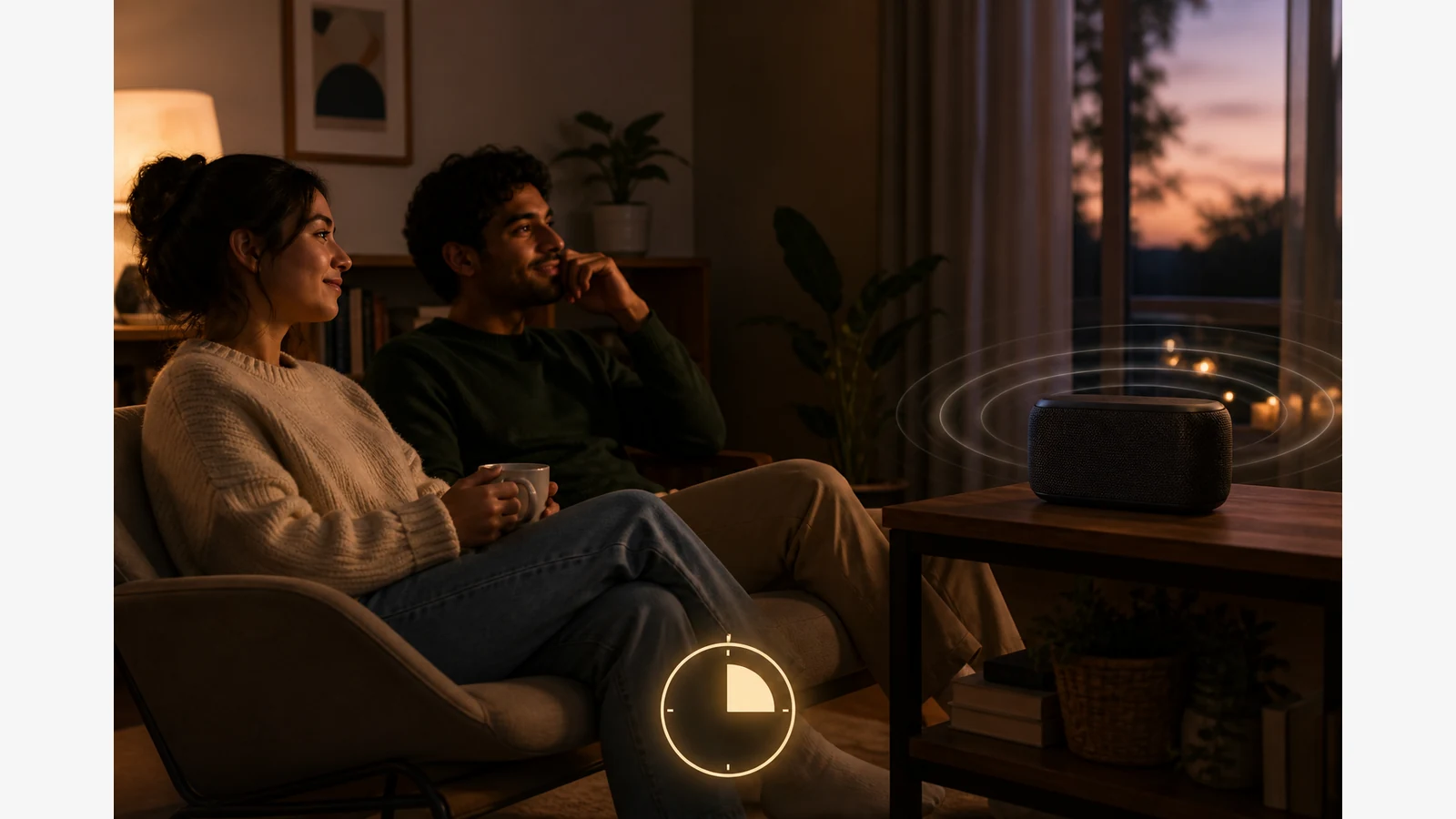
Safe Listening Volume For Bluetooth Speaker
Safe listening with a Bluetooth speaker depends on sound level, how long you listen, and how often you repeat that exposure—not on a single phone volume percentage. Lower the level, keep some distance, and take regular breaks.
Practical checks from public health guidance
WHO safe-listening material explains that risk rises with louder levels, longer sessions and frequent exposure. Practical habits include:
- Keeping volume moderate enough that you can still hold a conversation nearby without shouting over the speaker.
- Turning the level down in small rooms where reflections make music feel louder than outdoors.
- Avoiding the urge to “fix” fatigue by raising volume after long sessions—take a break instead.
WHO-ITU work on safe listening devices and venue guidance likewise focuses on exposure awareness and level management rather than promising that any one gadget makes listening risk-free.
Distance, room size and placement checklist
- Place the speaker on a stable surface away from your ears—side table distance beats holding it beside your head.
- Point it across the room rather than straight into a pillow fort or bunk where listeners sit centimetres away.
- In shared flats, lower volume further so neighbours are not part of your listening experiment.
- Do not translate a handset percentage into a claimed speaker decibel output; phones do not report the speaker’s true level.
Break schedule ideas for everyday use
| Activity | Volume habit | Break habit |
|---|---|---|
| Study or reading | Background level that still allows easy speech | Pause playback every hour for quiet time |
| Gaming | Keep effects clear without maxing the dial | Mute between matches or during long queues |
| Social listening | Talk-over-friendly levels in small rooms | Rotate quiet tracks and outdoor air breaks |
Warning signs—see a professional
If you notice persistent ringing, muffled hearing, pain or lasting difficulty understanding speech after loud sessions, stop the exposure and seek advice from a qualified hearing professional or GP pathway. This article does not diagnose conditions.
Product boundary and related reading
No maximum sound level, limiter or WHO-ITU device-standard claim is verified for this store’s speaker, so treat the guidance as general safe-listening practice. For enclosure protection literacy see what an IP rating means for Bluetooth speakers; for silent-connection faults see Bluetooth speaker connected but no sound. When you want a soft category browse afterward, open the cyberpunk RGB speaker page without expecting hearing-protection features to be listed as certified.
FAQ
Is 50% volume always safe?
No. Percentage scales differ by device and room. Use conversation comfort, distance and breaks instead of a fixed number.
Do RGB lights affect hearing risk?
No. Light modes do not change acoustic exposure.
Can a speaker be “WHO safe certified” by default?
Do not assume that. Check whether a manufacturer documents a specific standard—and still manage level and time.