What Does Ip Rating Mean For Bluetooth Speakers
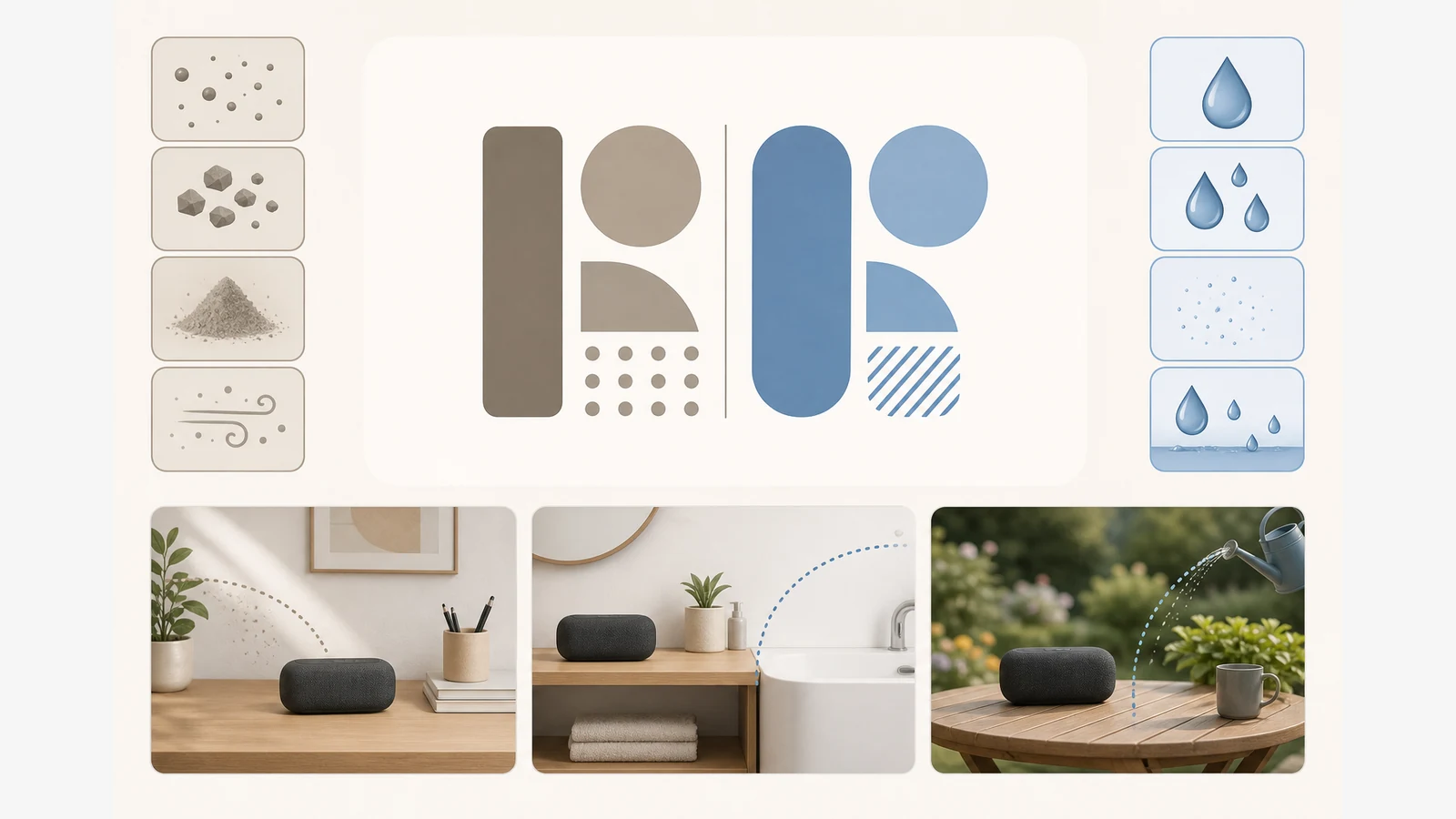
An IP rating on a Bluetooth speaker describes tested enclosure protection against solid objects and water under defined laboratory conditions. It is not a general toughness score, and a missing rating means you should not assume splash, dust or outdoor protection.
How to read the two digits (and X)
Standards such as BS EN / IEC 60529 organise ingress protection into separate numerals:
- First digit — protection related to solid foreign objects / access.
- Second digit — protection related to harmful water ingress.
- X — that digit was not stated or not tested in the claim you are reading, so you cannot infer it from the other numeral.
Dust and water are tested separately. A higher-looking water digit does not automatically prove dust performance, and the reverse is also true.
Comparison table: common water-test boundaries buyers confuse
| Claim pattern shoppers see | What it roughly points to in IP water tests | Buyer caution |
|---|---|---|
| Splash-oriented second digit (for example IPX4-class marketing) | Resistance to splashes from directions defined in the test method | Not the same as immersion; bathroom steam and direct shower jets may still exceed the claim. |
| Jet-oriented second digit | Harder water exposure than simple splashes, still within a defined nozzle test | Garden hoses and pressure washers are not automatic matches. |
| Immersion-oriented second digits (for example IP67-class marketing) | Short immersion under specified depth/time conditions in the standard test | Not a licence for swimming, diving or indefinite underwater use. |
Always match the exact code printed by the manufacturer to the exposure you expect. Marketing words such as “waterproof” without a documented code are weaker evidence than a full IP claim tied to IEC/EN 60529-style testing.
Match the documented rating to real use
- Bedroom or desk — many listeners need no water rating at all.
- Bathroom shelf — look for a documented splash-appropriate rating and still keep the speaker away from direct shower spray unless the claim clearly covers that exposure.
- Garden table — dew and light rain are different from leaving a speaker outside overnight; check both dust and water digits.
- Travel bag — dust digits matter for grit; water digits matter for spills. Neither replaces careful packing.
If no IP rating is stated
Treat the speaker as unprotected against water and dust. Do not place it in wet zones, and do not assume RGB lighting or a rugged look implies an enclosure test.
This store product has no verified IP rating in the campaign facts, so nothing here implies it is splash-proof, waterproof or outdoor-safe. Use IP literacy when comparing any brand, then read the specific listing.
Buyer checklist and next reading
- Find the exact IP code on the box, manual or specification sheet.
- Read both digits (or note each X).
- Map the code to your wettest and dustiest realistic use—not a best-case showroom demo.
- Ignore unsupported “waterproof” adjectives when no code is given.
Related guides: safe listening volume for a Bluetooth speaker, taking a Bluetooth speaker on a plane from the UK, and the cyberpunk RGB speaker category page for compact desk-oriented models after you finish the IP checks.
FAQ
Is IP67 always better than IPX4?
They answer different test questions. Compare digits for the exposure you actually need rather than chasing the largest-looking number.
Does RGB lighting change the IP rating?
No. Lights are unrelated to enclosure ingress tests unless the manufacturer documents otherwise.
Can I assume protection if the speaker looks rugged?
No. Only a documented rating describes the tested scope.